Healthcare Leadership, Policy & Digital Health News IndiaHealthcare Leadership, Policy & Digital Health News IndiaHealthcare Leadership, Policy & Digital Health News India
  • Home
  • News
  • Articles
  • Exclusive
  • HB Originals
  • Gallery
  • Advertisement
  • Press Releases
Healthcare Leadership, Policy & Digital Health News IndiaHealthcare Leadership, Policy & Digital Health News India
  • Medical Science
Search
  • Home
  • News
  • Articles
  • Exclusive
  • HB Originals
  • Gallery
  • Advertisement
  • Press Releases
Follow US
  • Advertise
© 2025 Health Hub Media Pvt Ltd. All Rights Reserved.
Healthcare Leadership, Policy & Digital Health News India > Blog > Health Tech > Health Data Privacy in India: Balancing Innovation with Patient Trust in the ABDM Era

Health Data Privacy in India: Balancing Innovation with Patient Trust in the ABDM Era

Published: January 16, 2026
SHARE

India’s rapid digital health expansion through the Ayushman Bharat Digital Mission (ABDM) has placed unprecedented amounts of sensitive personal health data into interconnected digital ecosystems. While this enables seamless care coordination, portable records, and AI-driven insights, it has also amplified longstanding concerns around privacy breaches, unauthorised access, commercial exploitation, and lack of meaningful patient control. As of early 2026, with over 420 million ABHA IDs issued, the tension between innovation and trust remains one of the most critical unresolved issues in the country’s digital health journey.

Glimpse:

Patients are broadly willing to share health data with direct care providers (doctors, hospitals, pharmacies) when benefits are clear, but show strong resistance to sharing with pharmaceutical companies, insurers, or third-party aggregators due to fears of misuse, discrimination, targeted marketing, or identity theft. Low digital literacy (especially in rural areas), inadequate awareness of rights, fragmented enforcement of the Digital Personal Data Protection Act 2023, and high-profile breaches continue to erode confidence. Experts stress that genuine trust requires granular consent, transparent data practices, strong penalties for violations, and hybrid models that preserve human reassurance alongside digital convenience.

India stands at a pivotal moment in its digital health transformation. The Ayushman Bharat Digital Mission has created one of the world’s largest federated health record systems, linking millions of citizens to their medical histories through ABHA IDs and enabling real-time sharing across public and private providers. Yet this very connectivity has intensified public and expert scrutiny over how health data is collected, stored, shared, and protected. The core question persists: in a country where digital literacy remains uneven, cyber threats are rampant, and health information carries profound social stigma, can patients truly trust the system with their most sensitive personal data?

Studies and real-world observations reveal a clear “trust paradox”. Patients are generally comfortable sharing data when it directly improves their care such as with treating physicians, diagnostic labs, or pharmacies for faster prescriptions and follow-ups. However, willingness drops sharply when data access extends to pharmaceutical companies, insurance firms, researchers, or government aggregators beyond immediate treatment. Fears include targeted marketing of expensive drugs, denial of insurance coverage based on pre-existing conditions, employment discrimination, or social stigma around conditions like HIV, mental health disorders, infertility, or genetic risks.

The Digital Personal Data Protection Act 2023 provides a foundational legal framework, requiring explicit consent, purpose limitation, data minimisation, breach notifications, and significant penalties for violations. Yet enforcement mechanisms are still evolving, and many patients remain unaware of their rights or how to exercise them. Rural users, elderly individuals, women in conservative households, and low-literacy groups face additional barriers: limited smartphone ownership, poor internet connectivity, language gaps in apps and consent forms, and reliance on family members who may not fully understand privacy implications.

Frontline healthcare workers also highlight practical challenges. ASHA workers and community nurses often carry the burden of data entry and patient onboarding without adequate training or reliable connectivity, leading to incomplete or inaccurate records. Privacy concerns among providers themselves fear of liability for breaches or misuse further slow adoption in some regions.

Experts agree that trust cannot be legislated alone; it must be earned through visible safeguards and tangible benefits. Recommendations include rolling out widespread digital literacy campaigns (especially in rural and low-income communities), implementing granular consent mechanisms that let patients decide exactly which data is shared with whom and for how long, mandating transparent privacy notices in local languages, and creating accessible grievance redressal channels. Hybrid models that combine digital convenience with in-person reassurance such as community health workers assisting with ABHA creation have proven particularly effective in building confidence.

The stakes are high. If trust is not prioritised, digital health risks becoming another layer of exclusion rather than a tool for empowerment. Conversely, when patients feel secure and see clear personal benefits, adoption soars as seen in states with strong awareness drives and reliable grievance systems.

India’s digital health policy has made remarkable progress in scale and infrastructure. The next phase must focus on earning and maintaining patient trust through ethical design, transparency, accountability, and genuine inclusion. Only then can the promise of a truly citizen-centric, equitable digital health ecosystem be fully realised.

“Patients will share data when they trust the system not because the law requires it, but because they believe it will help them, protect them, and respect them. That trust must be built deliberately, not assumed.”

By

HB Team

Related News

Nourish Raises $100 Million to Expand AI-Powered Metabolic Healthcare

May 22, 2026

A Commander’s Mission Beyond the Battlefield Serving the Humanity @ Amor Hospitals

May 20, 2026

Canadian Cruise Passenger Tests Positive in MV Hondius Hantavirus Outbreak

May 18, 2026

AI Set to Power India’s Next Healthcare Revolution Under PM-JAY and ABDM

May 13, 2026

IIT Patna Develops AI Wearable Device for Early Dementia Detection

May 12, 2026

HealthQuad Invests in LifeSigns to Scale AI-Based Remote Patient Monitoring Worldwide

May 12, 2026

How Digital Technology and AI Are Redefining Modern Nursing Care

May 12, 2026

India’s Medical Robotics Revolution Is Transforming Modern Healthcare

May 11, 2026

10 Health Tech Innovations Transforming Healthcare This National Technology Day

May 11, 2026

India Launches JANANI Platform to Digitize Maternal & Child Healthcare Tracking Nationwide

May 8, 2026

India Launches Swasth Bharat Portal to Create a Unified Digital Healthcare Ecosystem

May 7, 2026

Infosys Acquires Optimum Healthcare IT to Power AI-Driven Healthcare Transformation

May 6, 2026

MrMed Expands Bengaluru Hub to Power Faster Delivery of Critical Medicines

May 5, 2026

NIMHANS Launches App Repository to Simplify Mental Health Choices

May 4, 2026

Thermo Fisher’s $1.075 Billion Shake-Up: Microbiology Unit Sold to Astorg in Strategic Pivot

April 29, 2026

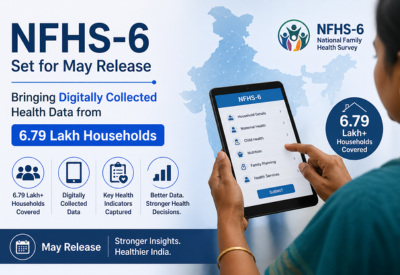
India’s Biggest Digital Health Survey Nears Release, Covering Over 6.7 Lakh Households

April 29, 2026

Gleneagles BGS Rolls Out ‘HEAL Health Card’ to Make Quality Healthcare More Affordable

April 29, 2026

Jharkhand Taps AI Power with Google Pact to Rebuild Digital Healthcare Backbone

April 29, 2026

Mumbai’s S.L. Raheja Hospital Elevates Care with Smart Diagnostics and Robo-Ortho Launch

April 29, 2026

India’s Digital Health Reality Check: Patients Say “Fix Trust First, Then Tech”

April 30, 2026
Philips & Nicolab Partner to Supercharge AI-Powered Stroke Care in India
Fortis Gurugram Expands with Next Gen Tech to Meet Rising Healthcare Demand
Pacific OneHealth Commits ₹300 Cr to Build Nationwide Micro-Hospital Network in India
Community Health Systems Appoints Kevin Hammons as CEO, Jason Johnson as CFO in Leadership Shake-Up
GoodRx Launches Direct-to-Employer Drug Platform at ViVE 2026
Your browser does not support the audio element.

Contact us

Privacy Policy

Terms & Conditions

HealthBuzz is a leading platform for healthcare news in India, covering hospital leadership updates, health policy developments, digital health innovations, and emerging healthcare startups. Stay informed with the latest insights shaping India’s healthcare ecosystem.

Facebook Twitter Youtube Whatsapp

Quick Links

  • Home
  • Articles
  • HB Originals
  • News
  • Videos
  • Gallery

Company

  • About us
  • Contact Us
  • Privacy Policy
  • Terms & Conditions

Install our Mobile App for Best Experience

Healthcare Leadership, Policy & Digital Health News IndiaHealthcare Leadership, Policy & Digital Health News India
Follow US
Health Hub Media Pvt. Ltd. © 2026 All Rights Reserved
Welcome Back!

Sign in to your account

Username or Email Address
Password

Lost your password?