India has successfully conducted its first ever two way tele-robotic surgeries between Narayana Medical College and GSL Medical College, showcasing the future of remote surgical care.
Glimpse:
Narayana Medical College (Nellore) and GSL Medical College (Rajamahendravaram) performed India’s first bi-directional remote robotic surgeries on April 25–26, where surgeons operated on patients in each other’s hospitals using real time robotic connectivity.
In a groundbreaking advancement for India’s healthcare system, Narayana Medical College Hospital in Nellore and GSL Medical College Hospital in Rajamahendravaram have successfully conducted the country’s first two way live tele-robotic surgeries.
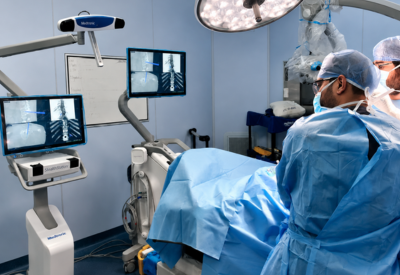
The procedures were carried out over two days April 25 and 26 using a real-time robotic surgical link between the two institutions. In one instance, surgeons located in Nellore operated on a patient in Rajamahendravaram, while in a parallel procedure, doctors in Rajamahendravaram performed surgery on a patient in Nellore.
This bi-directional exchange marks a significant leap from traditional tele-surgery demonstrations, as it enabled simultaneous, reciprocal surgical interventions between two geographically distant hospitals hundreds of kilometers apart.
The surgeries included procedures such as gallbladder removal and hernia repair. Medical teams reported that all operations were completed successfully without complications, demonstrating the reliability of robotic systems combined with high speed, low latency connectivity.
Doctors noted that while the surgeries took slightly longer than standard robotic procedures, this was primarily due to initial coordination and setup between the two sites. With further optimization, procedure times are expected to match conventional robotic surgery durations.
Crucially, full medical teams were present at both locations to ensure patient safety and manage intraoperative requirements, highlighting a hybrid model where remote expertise is supported by on ground clinical care.
Leaders and experts hailed the achievement as a major step toward democratizing access to specialized surgical expertise. By enabling surgeons to operate remotely, such technologies can bring advanced care to underserved and remote regions without requiring patients to travel long distances.
This milestone also underscores the growing role of digital infrastructure particularly high speed internet and precision robotics in transforming healthcare delivery. As tele-robotic surgery continues to evolve, it is expected to reshape surgical care models, making them more accessible, scalable, and collaborative across geographies.