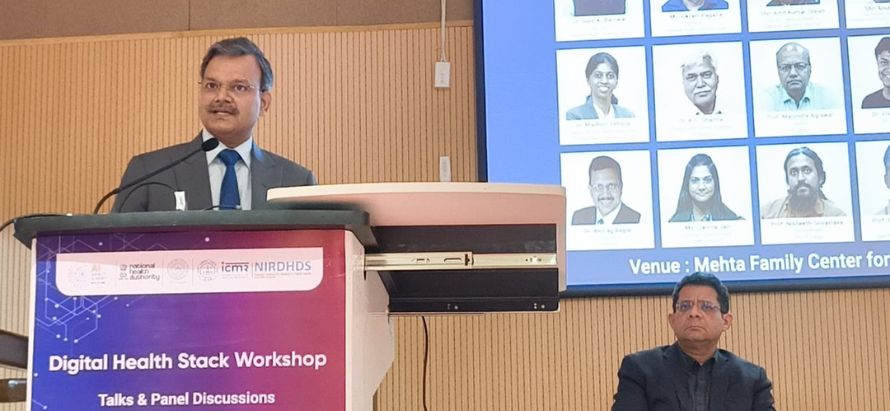
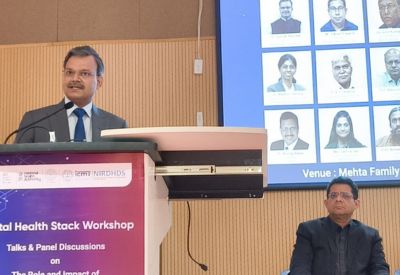
India’s accelerating adoption of artificial intelligence in healthcare from AI-assisted radiology and pathology interpretation to predictive risk models, triage systems, and clinical decision support has brought both transformative potential and serious risks into sharp focus. At the India Digital Health Summit on January 19, 2026, Dr. R.S. Sharma, CEO of the National Health Authority (NHA), delivered a clear and forceful message: AI systems deployed in Indian healthcare must be rigorously trained, validated, and continuously tested on datasets that genuinely reflect the country’s extraordinary diversity.
India encompasses one of the world’s most heterogeneous populations over 1.4 billion people speaking hundreds of languages, belonging to thousands of ethnic and caste groups, living across vastly different geographies, climates, diets, socio-economic conditions, and levels of healthcare access. Yet many AI models currently used or piloted in India have been trained predominantly on Western (often Caucasian) datasets or limited urban Indian cohorts. This mismatch can lead to significant performance degradation: reduced sensitivity in detecting diseases among rural patients, ethnic or regional bias in risk scores, inaccurate triage decisions, and diminished effectiveness in low-resource or underserved settings.
Dr. Sharma highlighted real-world examples where imported or inadequately localised AI tools have shown lower accuracy in Indian patients particularly in radiology (chest X-rays for tuberculosis), dermatology (skin lesion detection across diverse skin tones), and cardiology (ECG interpretation in varied ethnic groups). He cautioned that unchecked deployment of such models could worsen existing health inequities, delay critical diagnoses, and undermine public confidence in digital health initiatives under the Ayushman Bharat Digital Mission (ABDM).
The NHA CEO outlined several concrete expectations moving forward:
- All AI/ML-based medical devices and clinical decision support software must demonstrate performance across diverse Indian subpopulations (rural/urban, different ethnic groups, socio-economic strata, age, gender) as part of regulatory approval.
- Developers must publicly report disaggregated performance metrics sensitivity, specificity, positive/negative predictive values for major demographic segments.
- Continuous post-market surveillance will be required to monitor for performance drift or emerging bias as models are used in real-world Indian settings.
- Preference will be given to models trained or fine-tuned on Indian datasets, especially those reflecting rural, tribal, and low-income populations.
The statement reinforces the Digital Personal Data Protection Act 2023 and the Medical Devices Rules 2017, which already classify most AI diagnostic tools as regulated medical devices. The NHA is expected to issue detailed guidelines in the coming months, potentially mandating diversity testing and reporting as a condition for market approval or integration into the ABDM ecosystem.
The announcement has been welcomed by patient advocacy groups, medical associations, and domestic AI healthtech companies, who view it as a vital step toward responsible, equitable AI deployment. It also sends a clear message to global AI vendors: any healthcare AI solution seeking meaningful adoption in India must prove robust performance across the country’s diverse population.