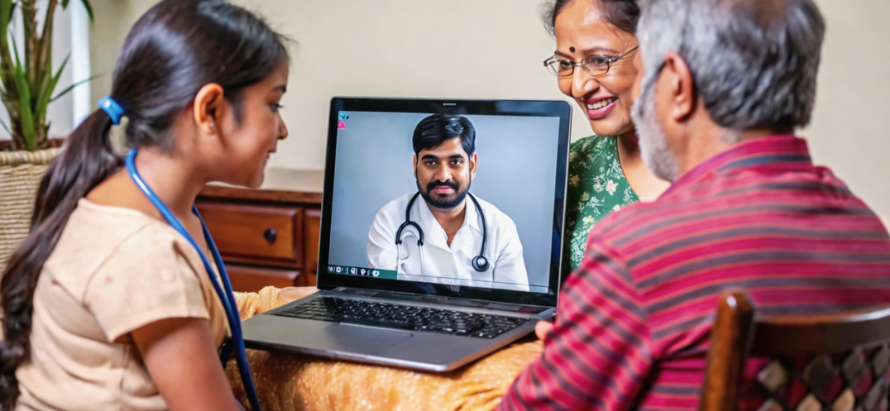
Virtual care solutions, including telemedicine, remote patient monitoring, and AI-powered tools, are rapidly transforming healthcare delivery for populations in remote and rural regions by overcoming geographical barriers, specialist shortages, and infrastructure limitations through patient centric digital models.
Glimpse:
A recent analysis highlights how virtual healthcare is bridging the rural urban divide, particularly in countries like India. Government initiatives such as the Ayushman Bharat Digital Mission and eSanjeevani have enabled nearly 480 million teleconsultations, while startups contribute AI diagnostics and vernacular apps. Technologies ranging from video consultations and wearables to digital therapeutics are improving access, chronic disease management, and emergency support, though challenges like connectivity and digital literacy persist, pointing toward hybrid care as the future.
People living in remote and rural communities often face significant hurdles in accessing quality healthcare due to poor infrastructure, shortage of specialists, long travel distances, and financial constraints. Traditional facility based care tends to concentrate advanced services in urban centres, leaving primary health needs unmet and resulting in delayed treatment for chronic conditions and preventable diseases. Virtual care has emerged as an effective solution by shifting the focus from hospitals to patients through digital platforms that deliver services directly at or near home.
Virtual care includes a wide range of technologies such as real time video consultations, mobile health applications, remote patient monitoring devices, asynchronous data exchange, AI-driven diagnostics, chatbots, and digital therapeutics. These tools enable clinicians to provide timely advice, monitor vital signs continuously using wearables for conditions like diabetes and hypertension, and coordinate care more efficiently. In emergency situations, virtual support can offer immediate guidance until physical help arrives, while eICU systems allow remote oversight of critical patients. Mental health services have also become more reachable through secure video or chat based counselling in areas where stigma or access issues previously limited support.
In India, where a large rural population struggles with healthcare disparities, government led efforts have accelerated adoption. The Ayushman Bharat Digital Mission is building a unified digital health ecosystem, and the eSanjeevani telemedicine platform has successfully facilitated around 480 million teleconsultations, proving especially beneficial for patients in distant locations. Complementary services like Tele-Manas further extend mental health support. Private players and startups are enhancing reach with last-mile medicine delivery, AI tools for quicker diagnostics, and apps available in local languages. Examples include solutions from companies like Qure.ai that bring advanced imaging analysis to underserved regions.
Despite clear advantages in reducing travel burdens, improving care coordination, and enabling proactive interventions, virtual care still faces obstacles. Limited high speed internet in far flung areas, varying levels of digital literacy among users, concerns over data privacy and security, and regulatory complexities can slow progress. Certain medical situations still require in-person examinations or tests, making fully virtual models insufficient in every case. Experts therefore advocate for hybrid approaches that thoughtfully combine online convenience with necessary physical interactions to ensure safe and equitable care.
Looking forward, sustained progress will depend on stronger digital infrastructure, supportive policies, and closer public private collaboration. Integration of electronic health records with telemedicine platforms, along with advances in AI, IoT, and analytics, promises more personalized and predictive care. By prioritising user feedback and building resilient systems, virtual care can evolve into a cornerstone of inclusive healthcare that reaches every community, regardless of location.