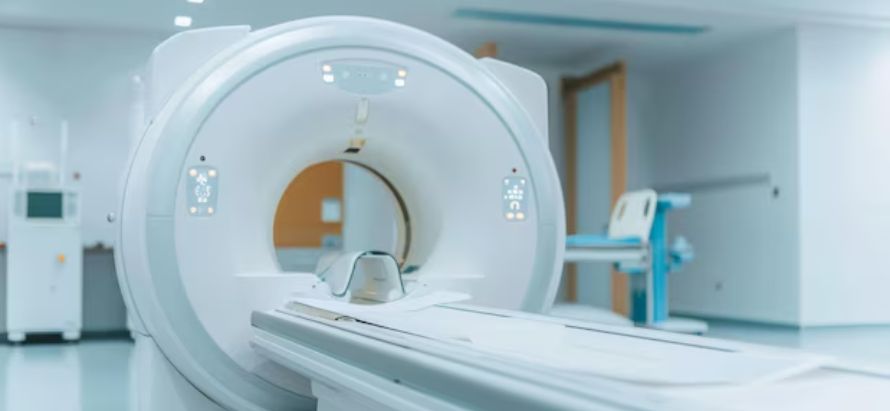
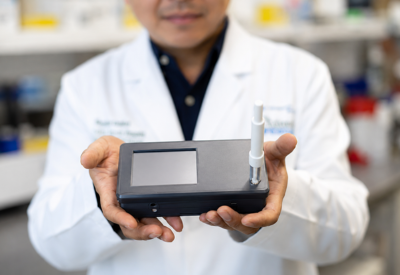
Bengaluru-based VoxelGrids, backed by Zoho Corporation, has launched India’s first completely homegrown 1.5 Tesla MRI scanner a helium-free, lightweight system now operational at Chandrapur Cancer Care Foundation near Nagpur. This breakthrough slashes manufacturing costs by ~40%, boosts energy efficiency, and paves the way for mobile units in underserved areas.
Glimpse:
Unveiled on December 25, 2025, after 12 years of R&D led by founder Arjun Arunachalam, the scanner weighs just 2-3 tonnes (vs. traditional 6 tonnes), consumes less power, and offers pay-per-use models. With current capacity for 20-25 units annually and plans for commercial launch by fiscal year-end, it addresses India’s acute MRI shortage (~3.5 scanners per million people) while advancing Aatmanirbhar Bharat in deep-tech medtech.
Deep in Bengaluru’s innovation ecosystem, a 12-year quest has culminated in a machine that could rewrite India’s diagnostic destiny. VoxelGrids’ indigenous 1.5 Tesla MRI scanner unveiled on December 25, 2025, and already scanning patients at Chandrapur Cancer Care Foundation stands as the nation’s first fully homegrown system, free from the cryogenic shackles of liquid helium that plague imports from Siemens, GE, and Philips.
This isn’t a mere copy; it’s a reinvention. By adopting a conduction-cooled “dry magnet” design, VoxelGrids eliminates helium dependency, cutting build costs by nearly 40%, slashing weight to 2-3 tonnes, and enhancing resilience to power fluctuations—tailor-made for India’s diverse grids. Energy efficiency soars, maintenance simplifies, and the compact footprint opens doors to mobile, containerized versions for rural outreach, echoing recent mobile training labs (Medtronic’s tier-2 push) that democratize advanced skills.
Founder Arjun Arunachalam’s journey from IIT Bombay faculty to global grants and Zoho’s pivotal $5 million investment mirrors India’s deep-tech maturation. Supported by BIRAC under the National Biopharma Mission, this scanner addresses a glaring gap: just ~5,000 MRIs nationwide, mostly urban-concentrated, amid rising NCDs demanding early imaging. Flexible pay-per-use pricing further lowers barriers for smaller hospitals, aligning with GST exemptions boosting insurance upgrades and preventive shifts (NHA’s hyper-personalized vision).
In a year of medtech milestones from biologics expansions (Kashiv’s ₹648 crore funding) and sovereign clouds securing data (L&T Vyoma’s alliances) to quality enforcements (UP’s HEM 2.0) VoxelGrids’ breakthrough amplifies self-reliance. With Bengaluru capacity at 20-25 units yearly and eyes on volume scaling, it challenges import dominance, fosters jobs in cryogenics and RF engineering, and promises equitable access turning “pharmacy of the world” ambitions into diagnostic sovereignty.