Glimpse:
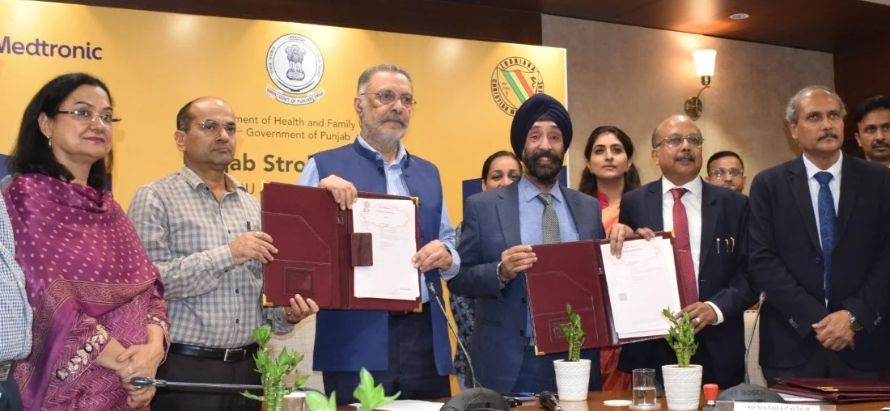
The Punjab government, in partnership with Christian Medical College Ludhiana, Qure.ai, and Medtronic, has launched an AI-powered stroke screening network across several district hospitals. In just a few months, it has screened more than 700 people showing signs of stroke. Local centres in Hoshiarpur, Ludhiana, Sangrur, and Patiala provide CT scans that are analyzed instantly by AI, with results shared with neurologists at the central hub. Six patients showing severe ischemic strokes were routed immediately for mechanical thrombectomy free of cost. The initiative aims to reduce stroke mortality and long-term disability by speeding up diagnosis and enabling timely, advanced intervention.
In Punjab, a new AI-driven stroke care model is making waves and saving lives. The state’s hub-and-spoke network, involving district hospitals and a central hub at Christian Medical College Ludhiana, uses artificial intelligence to identify stroke patients early and fast.
Here’s how it works: a patient suspected of stroke arrives at a participating district center like Hoshiarpur, Ludhiana, Sangrur, or Patiala. They get a CT scan right away. That scan is fed through an AI system (developed by Qure.ai), which rapidly analyzes the image. Results are shared in minutes with neurologists based at the hub, who guide local doctors. If the stroke is severe and needs clot removal (mechanical thrombectomy), the patient is transferred to Ludhiana for treatment all free of cost.
Within just a few months, over 700 suspected stroke cases have been screened through this system. Among them, six patients were identified and treated with mechanical thrombectomy. This is significant because, in private settings, the same procedure might cost several lakhs of rupees making it inaccessible for many.
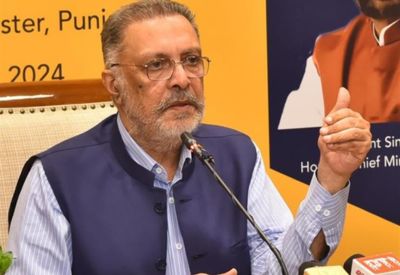
Health Minister Dr. Balbir Singh underscored the importance of removing financial and logistical obstacles so that critical treatment isn’t delayed. For strokes, time is brain: every minute lost can mean worse outcomes or irreversible damage. By integrating AI, imaging, remote specialist consultation, and swift transfers, this project is closing gaps in access especially in areas far from super-specialist centres.
There are challenges, of course: ensuring CT scan availability at all spoke centres, maintaining fast AI turnaround, transport logistics for critical cases, and building awareness so people recognize stroke symptoms early. But early data shows this model has huge potential not just in Punjab, but as a template for how states across India might tackle prompt stroke care.