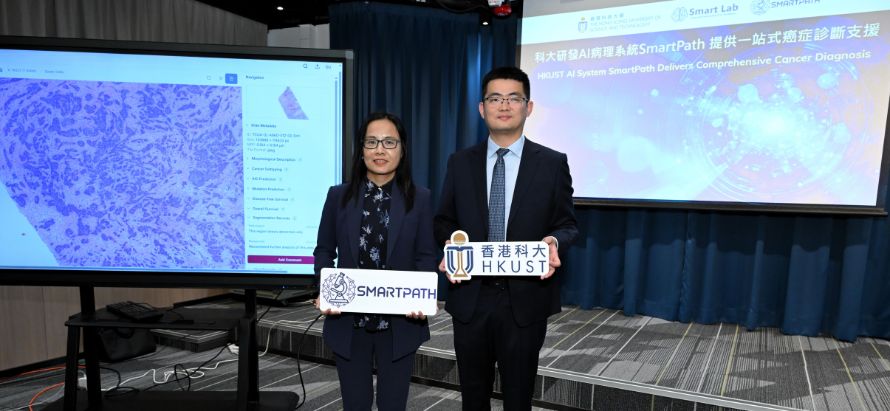
In a significant development for AI in diagnostics, HKUST has unveiled SmartPath, a next-generation pathology-AI platform designed to transform cancer diagnostics and clinical workflows. The system comprises two foundation models: a Generalisable Pathology Foundation Model (GPFM) for tumour identification and sub-typing, and a Multimodal Whole-slide Pathology Foundation Model (mSTAR) which integrates slide images with contextual data to generate detailed pathology reports.
SmartPath has been trained on over 500,000 pathology slides from at least 34 cancer types including lung, breast, colorectal and gastric drawing on datasets spanning China, North America and Europe. This diversity in training data is claimed to enhance the system’s generalisability across populations.
In early clinical validation, the system achieved more than 95 % accuracy in tasks such as malignancy detection, treatment-response prediction and report generation benchmarking ahead of prior models. One partner hospital in Guangzhou reported significant reductions in pathology turnaround time after deploying the algorithm in a trial.
Now, HKUST is actively pursuing regulatory approval in both Hong Kong and mainland China. The aim is to integrate SmartPath into routine pathology workflows, enabling pathologists to focus on complex cases while the AI handles large-volume, routine tasks at scale. Analysts say the rollout could accelerate advanced diagnostics access, particularly in hospitals with limited specialist staff.
However, success will depend on factors beyond accuracy especially integration into lab operations, data privacy, regulatory compliance and post-market performance. Given the complexity of cancer pathology and the high stakes of diagnostic errors, SmartPath’s deployment will be watched closely by healthcare systems across Asia and beyond.