Apollo Athenaa Hospitals, part of the Apollo Hospitals Group, has introduced MRI-guided vacuum-assisted breast biopsy a cutting-edge diagnostic procedure that addresses one of the most challenging aspects of breast cancer detection in India. The technology, now available at the hospital’s advanced breast imaging centre in Hyderabad, allows clinicians to accurately sample lesions that are visible only on breast MRI and cannot be reliably targeted using conventional mammography or ultrasound.
Breast MRI is widely recognised as the most sensitive imaging modality for detecting breast cancer, particularly in women with dense breast tissue, genetic predisposition (BRCA mutations), high lifetime risk, or equivocal findings on other modalities. However, until recently, suspicious lesions identified solely on MRI often required either surgical excision or repeated short-interval follow-up imaging due to the lack of precise biopsy guidance in many Indian centres. The introduction of MRI-guided vacuum-assisted biopsy changes this paradigm by enabling radiologists to obtain large tissue samples under real-time MRI guidance in a minimally invasive, outpatient setting.
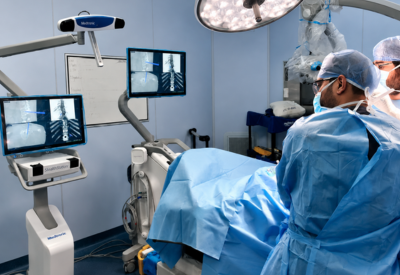
The procedure is performed under local anaesthesia using a specialised vacuum-assisted biopsy device integrated with the MRI scanner. The radiologist uses computer-aided targeting software to guide the needle precisely to the lesion, removing multiple cores of tissue for histopathological examination. Patients typically experience minimal discomfort, return home the same day, and receive results within a few days often avoiding open surgical biopsy altogether.
Dr. Geeta K., Senior Consultant Radiologist at Apollo Athenaa, explained the clinical significance: “MRI detects cancers that mammography misses, especially in dense breasts common among Indian women. But detection alone is not enough precise biopsy is critical to confirm malignancy and guide treatment. With MRI-guided vacuum-assisted biopsy, we can now confidently sample even the smallest or most difficult lesions, reducing diagnostic delays and unnecessary surgeries.”
The technology is particularly valuable for high-risk screening populations, women with a strong family history, BRCA mutation carriers, and those with prior breast cancer or atypical lesions. By providing accurate tissue diagnosis without major surgery, it supports breast-conserving treatment planning and contributes to better long-term outcomes.
Apollo Athenaa’s adoption of this procedure aligns with global best practices and addresses a critical gap in India’s breast cancer care continuum, where late-stage diagnosis remains common due to limited access to advanced imaging and biopsy techniques. The hospital has also established a multidisciplinary breast care team including radiologists, oncologists, surgeons, pathologists, and counsellors to ensure holistic management following diagnosis.
The launch is expected to serve as a model for other leading centres across India, where breast cancer incidence continues to rise and early, accurate diagnosis remains the single most important factor in improving survival.