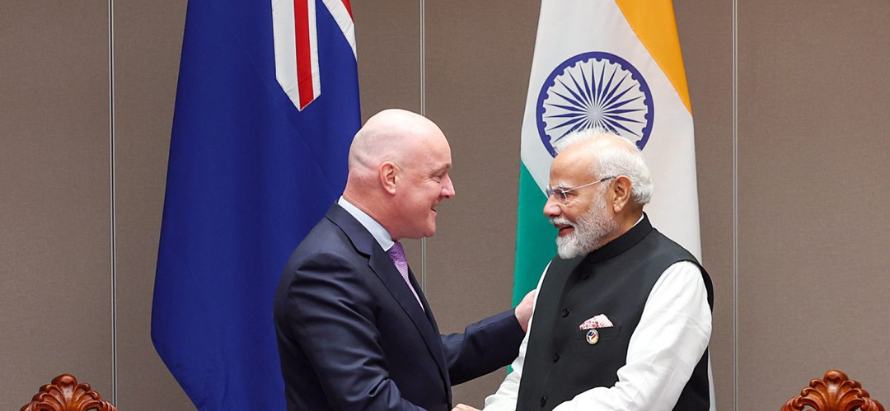
India and New Zealand have successfully concluded negotiations on a comprehensive Free Trade Agreement (FTA), marking a significant milestone in bilateral economic ties and delivering substantial benefits for India’s pharmaceutical and healthcare sectors. Announced following a telephone conversation between Prime Minister Narendra Modi and New Zealand Prime Minister Christopher Luxon, the pact—negotiated in just nine months across five rounds—is poised for signing within the next three months and implementation from next year.
A standout feature is New Zealand’s commitment to zero-duty access across 100% of its tariff lines for all Indian exports, including pharmaceuticals, medical devices, and healthcare technologies. Specifically, duty-free treatment covers 90 tariff lines in the pharmaceutical domain, directly targeting New Zealand’s annual pharmaceutical imports valued at approximately $1.4 billion. This opens lucrative opportunities for Indian drug manufacturers and suppliers to expand their footprint in Oceania.
To further ease market entry, the FTA incorporates expedited regulatory pathways, with New Zealand accepting inspection reports from prestigious global regulators such as the US FDA, EMA, and UK MHRA. This reduces compliance burdens, shortens approval timelines, and lowers costs for Indian exporters—addressing key non-tariff barriers that have historically constrained trade.
The agreement extends beyond goods to services, covering 118 sectors with enhanced access for Indian professionals, including healthcare, IT, and traditional medicine (AYUSH). Notably, it includes a dedicated annex on health and traditional medicine services—the first such provision in any New Zealand FTA—facilitating trade in these areas. India also secures most-favoured-nation treatment in 139 sub-sectors.
Broader trade dynamics show strong momentum: Merchandise trade reached $1.3 billion in 2024-25 (up 49% year-on-year), with total goods and services trade at $2.4 billion. Both nations aim to double bilateral trade within five years, bolstered by New Zealand’s pledge of $20 billion in investments to India over 15 years. Additional provisions support people-to-people ties, including a Temporary Employment Entry Visa for up to 5,000 Indian professionals annually (covering healthcare and AYUSH) for stays up to three years.
This FTA positions India’s world-class pharma industry—known as the “pharmacy of the world”—to capture greater market share in a high-value developed economy, while fostering innovation, job creation, and supply chain resilience. It aligns with India’s Viksit Bharat 2047 vision and diversifies export markets amid global shifts.
As the third FTA concluded by India in 2025 (following the UK and Oman), this deal underscores accelerating economic diplomacy and promises transformative growth for health-related trade.