Artificial Intelligence is no longer a futuristic concept in healthcare it’s actively transforming every stage from diagnosis to daily hospital operations. As patient volumes rise and workforce pressures intensify, AI systems are stepping in to enhance accuracy, speed, and efficiency across the care continuum.
In medical imaging and diagnosis, AI algorithms analyze X-rays, MRIs, CT scans, and other scans with remarkable speed and precision. They detect subtle abnormalities such as tumors, fractures, infections, or early signs of stroke that might be overlooked by human eyes. This capability reduces diagnostic errors, prioritizes urgent cases for radiologists, and accelerates turnaround times often enabling earlier interventions that improve survival rates.
Predictive analytics takes this further by monitoring real-time patient data (vitals, history, lab results) to forecast risks like cardiac arrest, sepsis onset, ICU deterioration, or hospital readmissions. Proactive alerts allow clinical teams to intervene before crises escalate, shifting care from reactive to preventive.
Patient-facing AI tools, such as chatbots and virtual assistants, handle routine interactions scheduling appointments, sending medication reminders, conducting initial symptom assessments, and providing post-treatment guidance. These reduce administrative burdens on staff while improving patient satisfaction and engagement.
Within electronic health records (EHRs), AI automates note-taking, transcription, summarization, and data organization, freeing physicians from documentation drudgery so they can dedicate more time to direct patient interaction.
Personalized treatment planning represents one of AI’s most promising applications. By integrating genetics, lifestyle factors, medical history, and response patterns, AI recommends tailored therapies that enhance efficacy and minimize side effects.
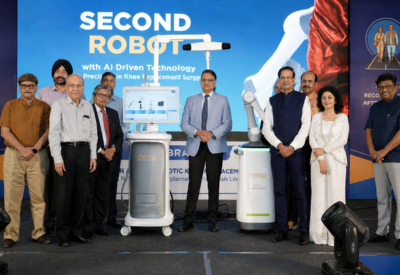
In the operating room, AI-assisted robotic systems deliver superhuman precision, enabling minimally invasive procedures with smaller incisions, less blood loss, and faster recovery.
Hospital-wide automation powered by AI optimizes operations end-to-end: managing patient flow and bed allocation, automating billing and insurance processing, tracking inventory and supplies, and even scheduling staff shifts. These efficiencies lower costs, reduce waste, and improve overall system performance.
AI is also accelerating drug discovery and medical research by sifting through massive datasets to identify promising compounds, predict interactions, and analyze trial outcomes shortening timelines for new treatments.
The momentum is clear: from enhanced diagnostic accuracy to streamlined operations, AI is driving better outcomes, lower costs, and a more sustainable healthcare ecosystem. As adoption accelerates globally in 2025, the focus remains on responsible implementation ensuring high-quality data, minimizing biases, and maintaining human oversight for safe, equitable care.