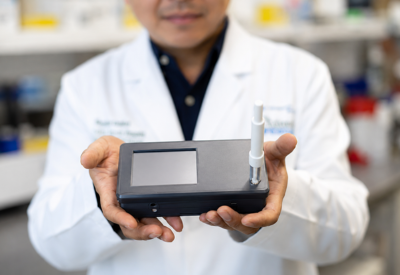
Imagine a tiny explorer, no larger than a grain of rice, embarking on a solo mission through the human body’s most enigmatic frontier the small intestine. This isn’t sci-fi; it’s the reality forged by researchers at IIT Delhi’s Medical Microdevices and Medicine Laboratory (3MLab) in collaboration with AIIMS New Delhi’s Gastroenterology team. Their ingestible microdevice, detailed in a December 2025 Small journal paper, autonomously navigates the GI tract to harvest microbial treasures from a region long shrouded in mystery.
The small intestine, that crucial 6-meter stretch absorbing nutrients and hosting trillions of microbes, has eluded direct sampling current methods like endoscopy are invasive, while stool tests offer mere echoes of upper-gut activity. Enter this pH-smart capsule: enteric-coated to survive stomach acid (pH 1-1.5), it awakens at intestinal alkalinity (pH 3-5), drawing fluid through precision inlets into sealed chambers before closing shop for safe passage out.
Animal trials proved its mettle intact samples recovered in most cases, no inflammation, sufficient DNA for species-level sequencing via nanopore tech. Beyond bacteria, it captured biomarkers like alkaline phosphatase, hinting at broader diagnostic potential for IBD, malnutrition, or early cancers.
This triumph layers onto India’s 2025 medtech surge: indigenous MRIs (VoxelGrids’ helium-free marvel), biologics scale-ups (Kashiv’s funding windfall), and AI clinics sprouting in public hospitals (GIMS Greater Noida’s upcoming launch). Funded by ICMR, with a filed patent, it embodies atmanirbhar deep-tech bridging lab ingenuity to bedside impact, much like sovereign clouds securing data or mobile labs democratizing skills.
Lead investigator Prof. Sarvesh Kumar Srivastava likens it to “rovers exploring inner space,” while co-author Dr. Samagra Agarwal underscores clinical gold: decoding small-intestine signals for precision therapies. As microbiome research explodes linking gut flora to immunity, mood, and chronic ills this device cracks open a vital window, accelerating India’s stride toward preventive, personalized care.