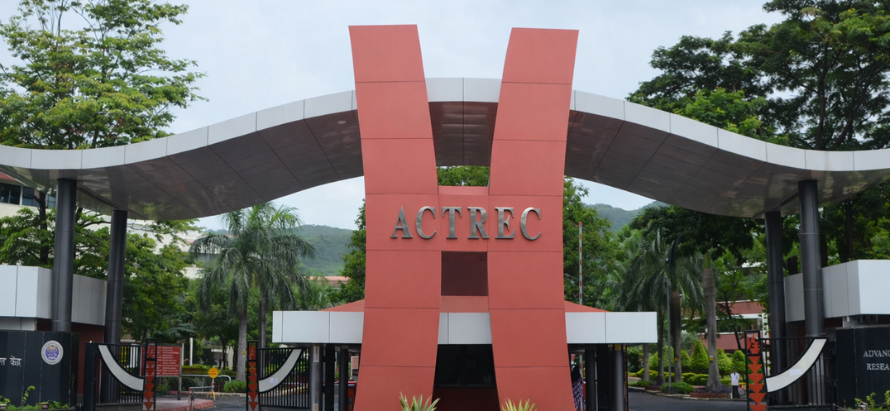
The Advanced Centre for Treatment, Research and Education in Cancer (ACTREC), part of Tata Memorial Centre (TMC), has entered into a strategic partnership with Philips to introduce and clinically evaluate advanced spectral CT imaging for earlier and more precise cancer detection. The collaboration brings Philips’ Spectral CT 7500 system to ACTREC, enabling enhanced tissue characterisation, reduced need for contrast agents, and improved diagnostic confidence in oncology staging, treatment planning, and response assessment.
Glimpse:
Announced on January 27, 2026, the partnership deploys Philips’ latest spectral detector CT technology at ACTREC’s imaging facility in Navi Mumbai. Spectral CT provides multi energy data in a single scan, allowing virtual monoenergetic reconstructions, material decomposition, and iodine quantification key advantages for detecting small lesions, differentiating tumour types, assessing treatment response, and reducing radiation/contrast dose in cancer patients. The initiative includes joint research, protocol optimisation, and training to generate India specific evidence on spectral CT’s impact in high-burden cancers (head & neck, thoracic, gastrointestinal, gynaecologic).
The Advanced Centre for Treatment, Research and Education in Cancer (ACTREC), the research and education arm of Tata Memorial Centre (TMC), has partnered with Royal Philips to install and clinically validate the Philips Spectral CT 7500 system one of the most advanced dual energy CT platforms available today. The collaboration, formalised on January 27, 2026, aims to harness spectral CT’s unique capabilities to improve early cancer detection, accurate staging, and treatment monitoring in a high-volume oncology setting.
Conventional CT relies on single-energy imaging, which limits tissue differentiation and often requires higher contrast doses or follow-up scans. Philips Spectral CT uses a dual-layer detector to capture full spectral data in every scan, enabling post-processing techniques such as virtual monoenergetic imaging (for better lesion conspicuity), material decomposition (to separate iodine, calcium, uric acid, etc.), and effective atomic number mapping all without increasing radiation dose.
At ACTREC, the system will support:
- Earlier detection of small or low-contrast lesions (e.g., pancreatic, liver, lung nodules)
- Improved characterisation of tumour aggressiveness and differentiation from benign lesions
- More accurate staging and restaging in head & neck, thoracic, abdominal, and pelvic cancers
- Reduced contrast load in patients with renal impairment (common in cancer populations)
- Enhanced treatment response assessment through quantitative iodine uptake metrics
The partnership includes joint protocol development, prospective clinical studies, training for radiologists and technologists, and multi-disciplinary tumour board integration to evaluate spectral CT’s real world impact on diagnostic confidence, patient management, and outcomes. ACTREC’s high patient throughput and diverse cancer case mix provide an ideal environment to generate India-specific evidence on spectral CT’s value in a resource constrained yet high burden setting.
Dr. [Lead Radiologist/Oncologist at ACTREC-TMC] said: “Cancer care in India demands tools that offer higher diagnostic confidence without adding cost or risk. Spectral CT gives us multiple ‘virtual’ datasets from a single scan helping us detect, characterise, and stage tumours more accurately while reducing contrast use and radiation exposure. This partnership with Philips will help us validate and optimise these benefits for Indian patients.”
Philips will provide technical expertise, application support, and ongoing software updates, while ACTREC contributes clinical insights, patient data (anonymised), and real-world validation. The collaboration is expected to produce peer-reviewed publications, best-practice guidelines, and training modules that can benefit other Indian cancer centres adopting advanced imaging.