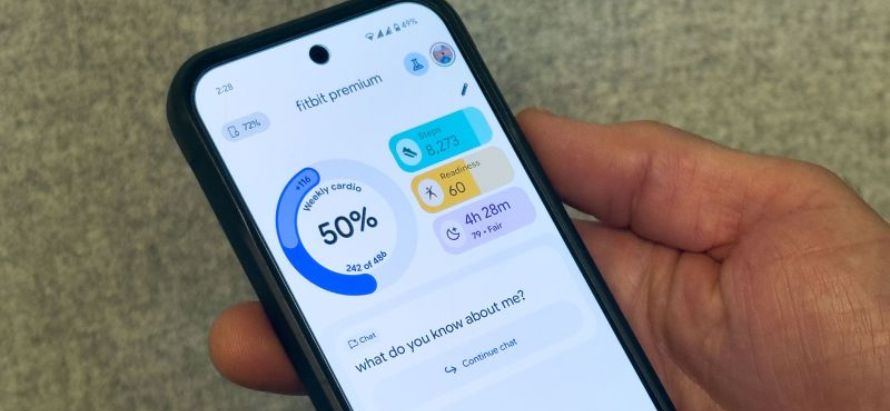
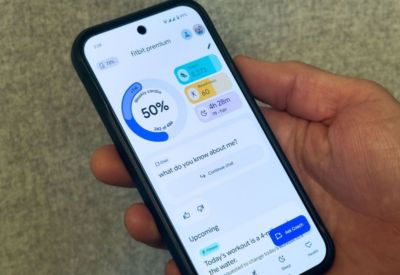
Google has rolled out significant AI-powered health enhancements to the Fitbit app, including direct integration of medical records for a more comprehensive view of user health. The update allows users to securely connect and view electronic health records (EHRs), lab results, and clinical notes alongside Fitbit-tracked data, enabling AI-driven insights, personalized recommendations, and better-informed conversations with healthcare providers.
Glimpse:
The new Fitbit app feature uses Google’s AI capabilities to aggregate and analyze connected medical records (via FHIR standards and partnerships with major EHR providers) with wearable data such as heart rate, sleep patterns, activity, and SpO2. Users gain contextual insights like trend comparisons (e.g., how daily activity correlates with lab values), early risk flags for conditions like hypertension or sleep apnea, and tailored wellness suggestions. The integration is opt-in, HIPAA-compliant, and available in the U.S. with plans for broader rollout, aiming to bridge consumer health tracking with clinical data for more proactive care.
Google has taken a major step in bridging consumer wearables with clinical healthcare by introducing medical records integration directly into the Fitbit app, powered by advanced AI capabilities. The update, announced on February 27, 2026, allows U.S. users to securely connect their electronic health records (EHRs) from participating providers using FHIR-based standards, bringing lab results, vital signs, medications, immunizations, clinical notes, and visit summaries into the same dashboard where Fitbit already tracks heart rate, sleep, activity, stress, and SpO2 trends. This creates a unified, longitudinal view of health data previously siloed between personal devices and medical systems.
The AI engine analyzes the combined dataset to deliver contextual, personalized insights for example, correlating Fitbit-detected irregular heart rhythms with recent ECG results from the doctor, flagging potential mismatches between self-reported activity levels and documented metabolic markers, or predicting fatigue risks based on sleep patterns and upcoming medication schedules. The system provides plain-language summaries, trend visualizations, and proactive suggestions (such as “Your recent labs show rising glucose consider discussing with your doctor”), all while maintaining strict privacy controls: users must explicitly consent to each connection, data remains encrypted, and no information is used for advertising or shared without permission.
Google emphasized that the feature is designed to empower users and support not replace conversations with healthcare providers. Early pilot users have reported greater confidence in managing chronic conditions like diabetes and hypertension, fewer surprises during doctor visits, and stronger motivation for lifestyle changes when seeing how daily habits impact clinical metrics. The integration is currently available in the U.S. with select EHR partners (including Epic MyChart and Cerner integrations), with international expansion and additional data sources planned for 2026–27. The update is free for Fitbit Premium subscribers and includes safeguards like clinician-verified reference ranges and clear disclaimers that AI insights are not medical diagnoses.
This move aligns with Google’s broader push to make health data more actionable and interconnected, especially as wearables generate increasing volumes of clinically relevant signals. By bringing medical records into the Fitbit ecosystem, Google aims to close the loop between everyday tracking and professional care, potentially reducing unnecessary tests, improving adherence to treatment plans, and enabling earlier interventions for at-risk individuals. The feature has already sparked strong interest among health systems exploring remote monitoring programs and value-based care models.