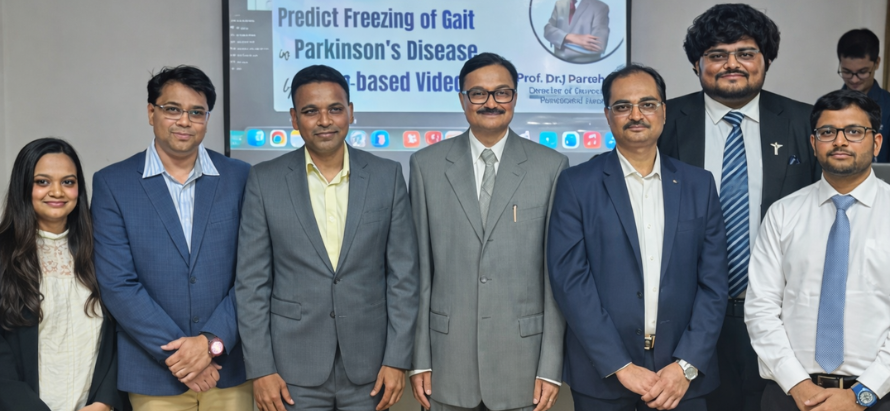
Jaslok Hospital and Research Centre in Mumbai has initiated a clinical study aimed at developing an AI-powered model for early prediction of Parkinson’s disease. The study will combine clinical data, imaging, genetic markers, and wearable sensor inputs to build a predictive algorithm that can detect the disease years before traditional symptoms appear.
Glimpse:
The research project seeks to create a reliable, non-invasive tool for identifying individuals at high risk of developing Parkinson’s disease. By leveraging artificial intelligence and multimodal data, the study aims to enable earlier intervention, better disease management, and improved patient outcomes. Jaslok Hospital is collaborating with technology partners and neurology experts for this initiative.
Jaslok Hospital and Research Centre has taken a significant step in Parkinson’s disease research by launching a dedicated clinical study focused on artificial intelligence based early prediction. The study aims to develop an advanced AI model capable of identifying the risk of Parkinson’s disease well before motor symptoms become evident.
The research will integrate multiple data sources including detailed clinical assessments, neuroimaging (MRI and DaTscan), genetic profiling, voice and gait analysis through wearable sensors, and other biomarkers. The goal is to train a robust AI algorithm that can accurately predict disease onset and progression in at risk individuals.
Parkinson’s disease currently affects millions worldwide, and early detection remains a major challenge because symptoms often appear only after significant brain cell damage has occurred. If successful, this AI-based predictive tool could revolutionise screening, allow for timely therapeutic interventions, and potentially slow disease progression.
This initiative reinforces Jaslok Hospital’s commitment to adopting cutting edge technology in neurology and contributing to high impact medical research in India.