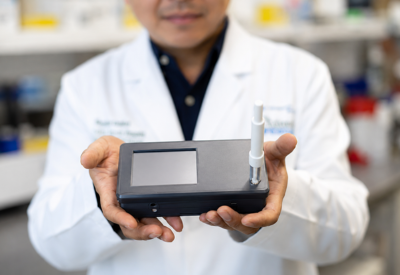
The Technology Development Board (TDB), operating under India’s Department of Science and Technology (DST), has greenlit financial support for a high-impact bilateral R&D project between an Indian medtech innovator and a leading Canadian research institution. The collaboration is focused on developing advanced continuous health monitoring technologies that can reliably track vital parameters such as heart rate variability, respiratory rate, oxygen saturation, movement patterns, and sleep quality over extended periods without requiring frequent clinical visits.
The Indo-Canada project integrates India’s strengths in cost-effective sensor fabrication, miniaturisation, and scalable manufacturing with Canada’s world-class capabilities in machine learning for physiological signal analysis, predictive algorithms, and clinical validation protocols. The resulting platform is designed to be low-power, non-intrusive (wearable patch or ambient room sensor), and capable of operating in low-connectivity environments critical requirements for deployment in rural India and other resource-constrained settings.
Key objectives include:
- Creating a modular monitoring system that supports both hospital-to-home transitions and long-term community-based care
- Developing AI models that detect early signs of deterioration in chronic conditions such as heart failure, COPD, diabetes complications, and post-operative recovery
- Ensuring affordability and manufacturability in India to enable large-scale domestic deployment and future export potential
- Conducting parallel clinical studies in India and Canada to generate robust, multi-ethnic validation data
The TDB funding will cover prototype fabrication, sensor optimisation, algorithm development, pilot clinical testing, regulatory pathway preparation (CDSCO in India and Health Canada pathways), and initial manufacturing scale-up planning. While exact funding figures were not disclosed, TDB typically provides partial grants covering 30–50% of project costs for high-potential, market-oriented collaborations.
Speaking on the announcement, a TDB spokesperson said: “Continuous monitoring is one of the most promising frontiers for reducing hospitalisations and improving quality of life in chronic disease management. By supporting this Indo-Canada partnership, we are fostering technology that is both clinically robust and commercially viable in India’s unique healthcare landscape.”
The project aligns closely with India’s broader strategic priorities under the Ayushman Bharat Digital Mission (ABDM), the National Health Policy’s focus on preventive and home-based care, and the Atmanirbhar Bharat emphasis on domestic manufacturing of high-value medical devices. It also strengthens bilateral science and technology ties between India and Canada, building on previous successful collaborations in healthtech and biotechnology.
Early prototypes are expected to enter small-scale clinical validation in late 2026, with first commercial products targeted for 2027–2028, initially in India and subsequently in other emerging markets.