Glimpse:
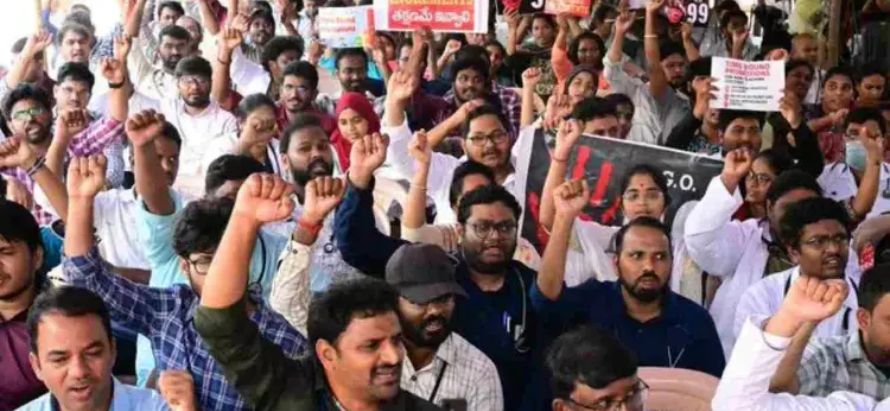
Primary Health Centre (PHC) doctors in Andhra Pradesh have been protesting through a relay hunger strike at Vijayawada’s Dharna Chowk, pressing the state government to restore and cement a 20% in-service postgraduate (PG) quota across clinical specialties through 2030. Though the government has offered the 20% quota for the current academic year, it refuses to commit to a longer term extension. The doctors also demand time-bound promotions, tribal allowances, notional increments, and better service conditions. With many PHCs shuttering or operating minimally, rural and tribal populations are left vulnerable. The agitation risks deepening the healthcare crisis unless a binding resolution is reached.
Tensions are escalating in Andhra Pradesh as PHC doctors crank up pressure on the state government with a relay hunger strike that’s entering its seventh day. The crux? The in-service postgraduate (PG) quota, service benefits, and job security.
Here’s how the situation unfolded:
These doctors argue that their sacrifices working in rural and hard areas entitle them to a sustained in-service quota 20% in all clinical branches through at least 2030. Previously, the quota was trimmed to 15% and limited to selected specialties, deepening discontent. Though government leaders agreed to the 20% quota for this year, they refused to guarantee it beyond that. That conditional promise hasn’t satisfied protestors.
Other demands include time-bound promotions (so that career progress isn’t stalled by bureaucratic delays), tribal area allowances, notional increments (accounting for inflation / stagnation), and improved working conditions. These have been pending for years according to the protesters.
Rural and tribal PHCs are already seeing service disruptions: many are shut, others are understaffed, and substitutes sometimes non-allopathic practitioners are being used to fill gaps. That move has drawn criticism as a violation of standards and a potential compromise of care quality.
The doctors’ association insists they’re not striking against the government, but challenging policies they see as breeding inequity in public healthcare service. Their resolve is bolstered by growing support: secondary hospital doctors and other health worker associations have extended solidarity.
The government, in response, claims fiscal constraints, admissions balance between direct and in-service PG seats, and a surplus of PG qualified doctors returning to public service demand caution in guaranteeing open-ended quotas. Health Commissioner Veerapandian has urged doctors to resume duties, citing a promise of policy review and written orders. But protest leaders say conditional assurances won’t cut it they want binding commitments.
At stake is more than just quotas. The protest underscores deep structural issues in India’s public health system: retention of doctors in rural posts, fairness in career progression, and the challenge of balancing incentives with systemic capacity.