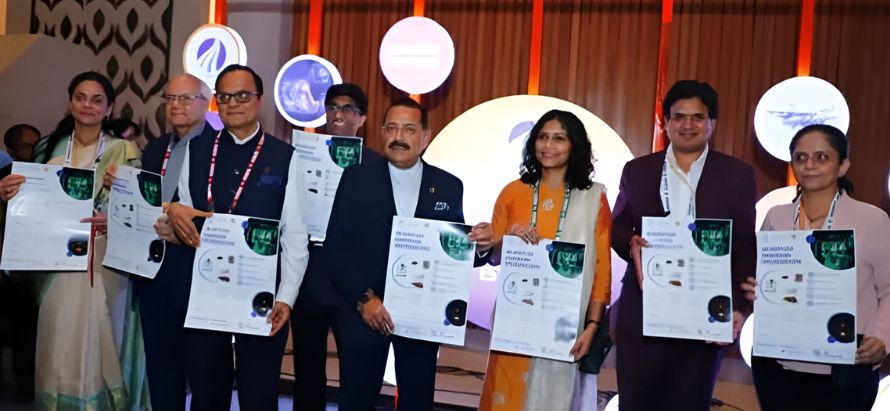
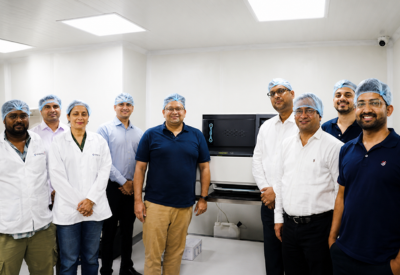
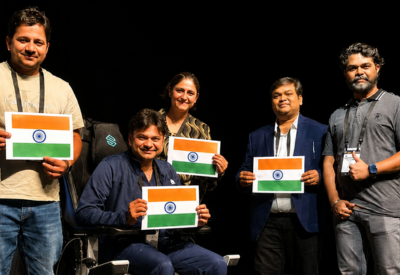
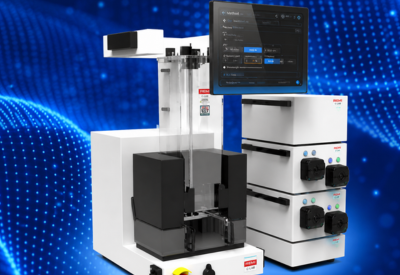
New Delhi IIT Bombay’s P-Quest Group, under the National Quantum Mission (NQM), has announced India’s first indigenous Quantum Diamond Microscope (QDM) for real-time, three-dimensional magnetic field imaging. This achievement was officially revealed at the Emerging Science, Technology & Innovation Conclave (ESTIC 2025), with participation from key figures such as Dr. Jitendra Singh, Union Minister of Science & Technology.
The QDM technology harnesses nitrogen-vacancy (NV) centers defects within a diamond lattice that retain quantum coherence even at room temperature. These NV centers enable highly sensitive detection of magnetic, electric, and thermal fluctuations using optically detected magnetic resonance (ODMR), allowing for optical read-out of local magnetic fields.
One of the most powerful capabilities of this system is its ability to map magnetic fields deep within three-dimensional structures such as the internal layers of semiconductor chips. This opens up new avenues for non-destructive evaluation, making it possible to inspect integrated circuits, batteries and microelectronic devices without damaging them.
Beyond diagnostics, the QDM’s sensitivity and spatial resolution make it a promising tool for neuroscience and materials research. Researchers anticipate that it will enable nanoscale visualization of dynamic magnetic activity in biological samples and advanced materials, widening the frontiers of quantum sensing in India.
Looking ahead, the IIT Bombay team plans to combine the QDM with AI and machine-learning-based computational imaging to further enhance performance, enabling applications such as sophisticated chip diagnostics, quantum-enabled biological imaging and geological magnetization studies.